
Startup Funding Brief · October 1, 2026 · 4 min read
Physical AI Draws $8.7 Billion in One Week as Category Matures
From an $8.2B acquisition to oversubscribed Series C and early-stage hardware bets, physical AI is pulling capital at every stage of the stack this quarter.
AMD Makes the Category Official
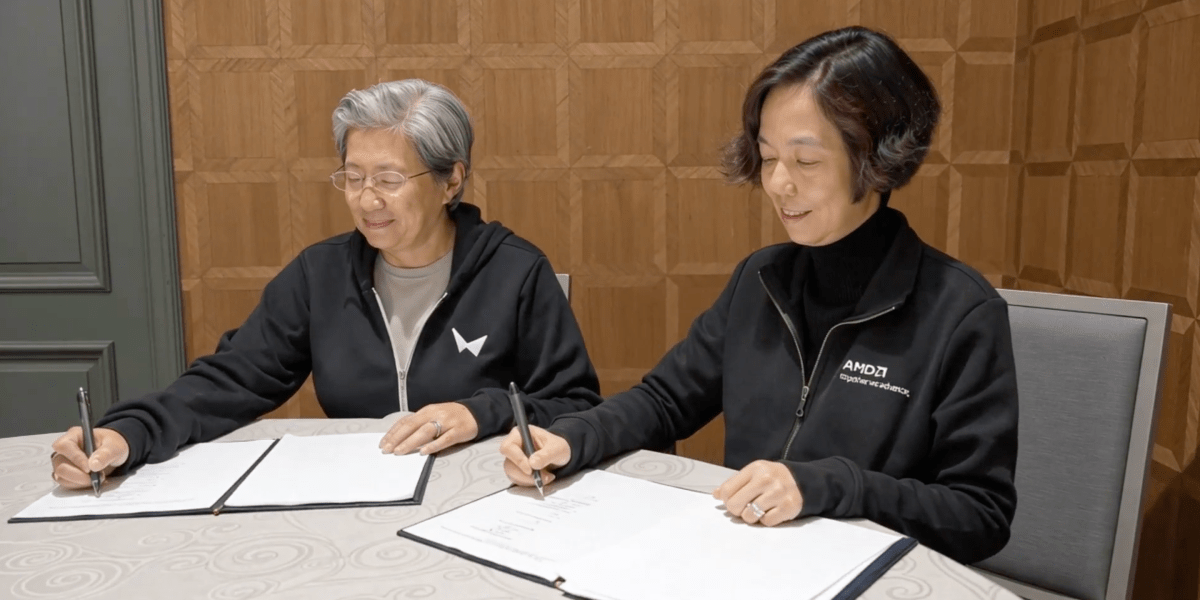
When a major semiconductor company spends $8.2 billion on a startup, it tells the rest of the market something about where the money is going. As Fortune reported, AMD acquired World Labs, the physical AI company founded by Fei-Fei Li, at that price [1]. The deal is not simply a talent acquisition or a product bolt-on — it is a strategic claim on the physical AI category by one of the largest chip designers in the world.
For founders raising a round in this space, the signal is worth reading carefully. Large acquirers do not pay $8.2 billion for a category they believe is speculative. AMD's move sets a valuation anchor and tells institutional investors that exits in physical AI are real and large. That changes the risk calculus for early-stage checks written today.
Institutional Money Enters the Stack
Two days before the AMD announcement closed the news cycle, SiMa.ai disclosed a $150 million Series C that brought its total capital raised to $500 million and pushed its valuation to $1.45 billion, as CXOtoday reported [2]. The round was oversubscribed and co-led by Fidelity Management & Research Company and Amplify, with AllianceBernstein, Baron Capital, J.P. Morgan, and Dell Technologies Capital also participating [2][4].
The investor mix matters as much as the size. Fidelity, AllianceBernstein, and Baron Capital are public-market crossover funds. When they enter a private round, they are typically positioning for an IPO within a two-to-four-year window. Their presence in an oversubscribed Series C suggests physical AI platform companies are being evaluated against public-market comps, not just venture multiples. Founders in this space who are approaching a Series A or B should expect diligence to reflect that higher bar.
Early-Stage Deals Show Where the Gaps Are
Not every deal this week was nine or ten figures. Atomic, an AI-native supply chain planning platform founded by former Tesla supply chain leaders, closed a $12.5 million Series A led by Klass Capital and Madrona, as PR Newswire reported [3]. The company's traction is specific: it automates 90 percent of purchasing for DoorDash's DashMart business and helped Good Chop cut inventory in half while more than doubling revenue [3]. Those are the kinds of metrics that close a Series A in a week.
Meanwhile, PicoJool, a Palo Alto developer of vertical-cavity surface-emitting lasers, raised $27.5 million in a Series A to scale production of 200 Gb/s devices for AI data center deployments, according to optics.org [5]. The company targets AI hyperscalers directly and plans to expand facilities in both the US and Taiwan [5]. Hardware infrastructure for AI — not just software running on top of it — is drawing meaningful venture capital at the Series A stage.
What the Pattern Means for Founders Raising Now
The week's deals span five orders of magnitude in deal size, from $12.5 million to $8.2 billion, but they cluster around a single theme: physical AI and the hardware required to run it. That is not a coincidence. As AMD's acquisition validates the category at the top end, capital flows down the stack — into platform companies like SiMa.ai at Series C, into application-layer companies like Atomic at Series A, and into enabling infrastructure like PicoJool's photonics work [1][2][3][5].
For founders raising a pre-seed or seed in adjacent areas — robotics, edge inference, industrial automation, supply chain intelligence — the conditions are as favorable as they have been. What is less clear from this week's data is how competitive the seed market is becoming. The items do not reveal how many firms passed on these deals before the leads committed, and the time from pitch to term sheet is not disclosed for any of the rounds. Founders should not assume speed; they should assume that category tailwinds raise the baseline of what investors expect to see before committing.
This week, if you are raising
- If you are in physical AI or an adjacent category, pull the SiMa.ai investor list — Fidelity, J.P. Morgan, and Baron Capital are now active in private physical AI rounds and are worth mapping into your outreach for a Series A or B.
- Atomic's Series A was anchored by specific, named customer results; before your next investor meeting, convert your traction into one or two concrete operational metrics the way Atomic did — percentage of a process automated, revenue impact, inventory reduction — rather than general ARR alone.
- AMD's $8.2 billion acquisition gives you a public data point to frame market size conversations with investors; use it to anchor the exit landscape, not just the TAM slide.
Sources
 [1]AMD acquires Fei-Fei Li’s physical AI startup World Labs for $8.2 billion | Fortunefortune.com
 [2]SiMa.ai Reaches $1.45B Valuation with $500 Million in Total Funding to Scale Physical AI in Humanoids, Automotive, and Dronescxotoday.com
- [3]Atomic Raises $12.5M to Build the AI Control System for Physical Goods Companiesprnewswire.com
 [4]Physical AI startup SiMa.ai raises $150M in Series C | YourStoryyourstory.com
 [5]PicoJool to scale VCSEL production with $27.5M series A | optics.orgoptics.org