
Startup Funding Brief · November 6, 2026 · 4 min read
Isomorphic Labs Seeks $5B as Drug Discovery Valuations Reach New Heights
A $50B ask for an AI drug discovery spinout, a seed math problem with no easy answer, and two agent-software rounds redefine what investors expect this quarter.
A $50B Bet on AI Drug Discovery
Isomorphic Labs, the drug discovery company spun out of Signal Copilot, is in talks to raise roughly $5 billion at a valuation of approximately $50 billion, according to Bloomberg as cited by Dealroom [1]. The round has not closed, and terms could still shift, but the figures alone reframe what AI applied to life sciences is worth to late-stage investors right now.
For founders operating well below that altitude, the signal is structural rather than aspirational. When a single pre-commercial AI company commands a $50 billion price tag, it compresses the relative attractiveness of everything beneath it on the risk curve. Investors writing large checks have a credible reason to concentrate capital in a handful of frontier bets rather than spread across dozens of earlier-stage companies. That dynamic tightens availability at seed and Series A even when headline venture activity looks robust.
The Seed Math Problem Every Founder Now Faces
A separate but directly connected pressure point sits at the earliest stage. As Jenny Fielding of Everywhere Ventures explained and Citation Bureau reported, a seed round priced at a $24 million post-money valuation now arithmetically requires the company to eventually reach $10 billion or more in exit value for investors to earn a standard venture return [2]. Outcomes at that scale are uncommon in any given vintage year, and the gap between that implied probability and actual historical frequency is widening.
What this means in practice: strong early growth is no longer sufficient to unlock the next round. Investors now want to see not just that revenue is moving but that the trajectory is consistent with the kind of scale the seed price already assumes. Founders who close a seed at current market prices are, in effect, signing up for a growth bar that would have been considered Series A territory two or three years ago. The valuation is not a reward for where you are — it is a binding commitment to where you must go.
Agent Software Draws Serious Capital at Two Stages
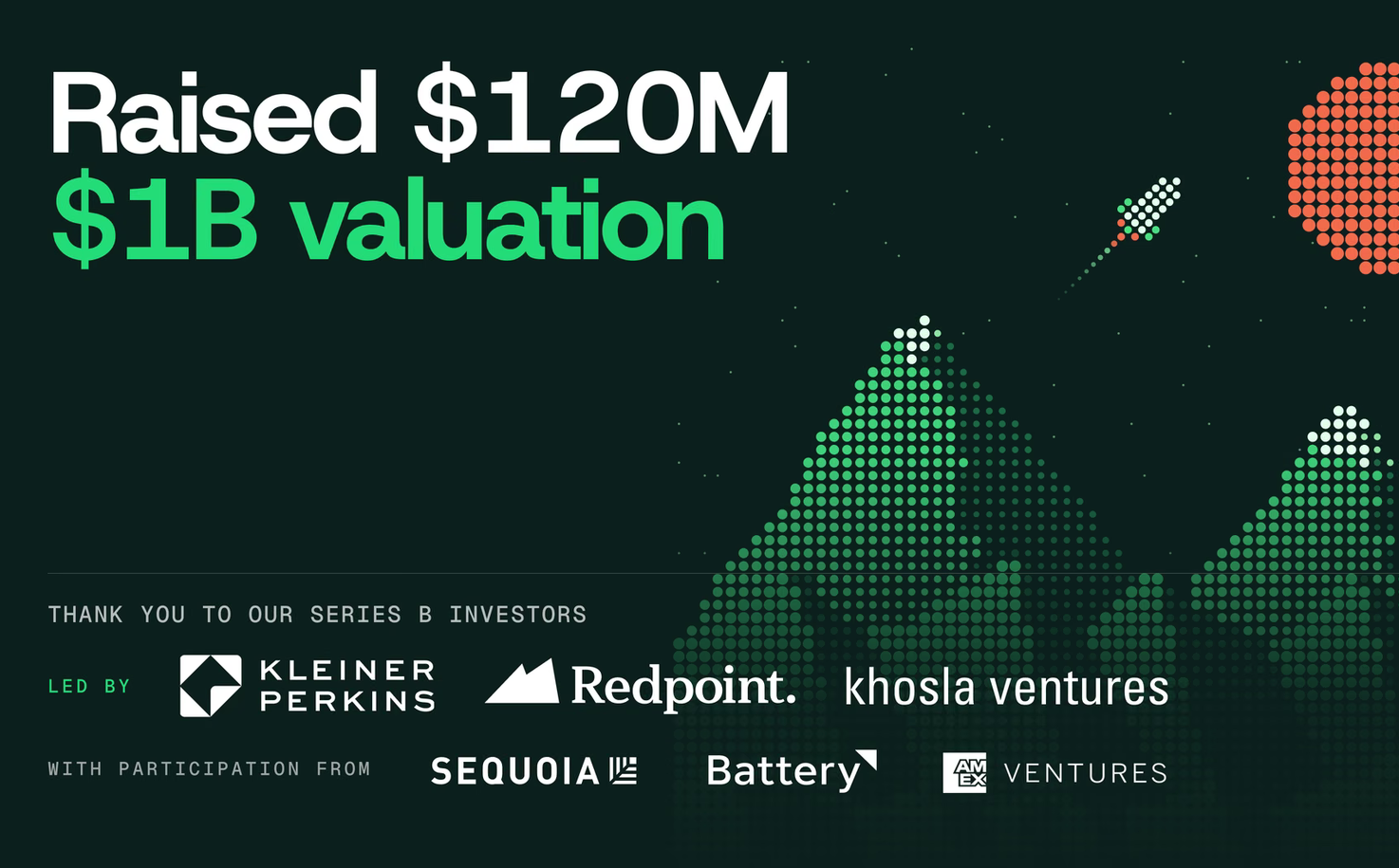
Two rounds from earlier this week illustrate where investors are placing conviction inside AI software. Traversal, which is building autonomous site reliability engineering agents, raised $120 million at a $1 billion valuation in a round led by Kleiner Perkins and Redpoint Ventures [5]. The company's focus — removing human intervention from infrastructure incident response — sits at the intersection of AI agents and enterprise cost reduction, a combination that continues to attract institutional backing.
Nooks, an AI sales automation startup, secured a $500 million commitment from General Catalyst's Customer Value Fund [3]. The structure here is worth noting: rather than a conventional equity stake, General Catalyst is taking a share of returns, a revenue-based arrangement that shifts how the economics of the round are distributed. That Nooks accepted this structure — and that General Catalyst deployed it at this scale — suggests both parties expect rapid, measurable revenue growth in the near term. For founders building agent-driven go-to-market tools, this is a data point about how investors may want to participate, not just how much they will deploy.
Early Hardware Raises Prove the Case for Specificity
At the other end of the size spectrum, South Korean startup albeeware closed a seed round of approximately $660,000, co-led by accelerators SparkLabs and SOSV [4]. The company builds no-code welding and grinding collaborative robots aimed at manufacturers dealing with skilled-labor shortages and an aging workforce in industrial settings.
The round is small by any measure, but its logic is clean: a defined labor problem, an identifiable customer base, and hardware purpose-built for a single industrial task. At a moment when seed valuations implicitly demand $10 billion outcomes, albeeware's round is a reminder that accelerator-led hardware financing operates on different math — tighter dilution expectations, different return timelines, and investors who specialize in the specific risk profile of physical products. Founders building hardware for manufacturing should not read the same signals as founders building general-purpose software agents.
This week, if you are raising
- If you are pricing a seed round this quarter, work backward from your post-money valuation to the exit it implies and make sure your current growth rate is defensibly on that path before you close.
- If you are building AI agent software for enterprise infrastructure or sales, the Traversal and Nooks rounds confirm that institutional investors are active and writing large checks — prepare materials that quantify cost reduction or revenue impact in concrete terms, not capability descriptions.
- If you are raising for industrial hardware, seek out accelerators and funds that specialize in that category rather than approaching generalist VCs applying software-company return expectations to your deal.
Sources
 [1]DeepMind spinout Isomorphic Labs in talks to raise about $5B at a $50B valuation | Dealroom Newsdealroom.co
 [2]Seed prices now assume exits that few years produce · Citation Bureaucitationbureau.com
 [3]AI sales startup Nooks secures $500 million in funding for expansion By Reutersinvesting.com
 [4]Welding robot startup albeeware raises $660,000 seed round from SparkLabs, SOSV | Dealroom Newsdealroom.co
 [5]Autonomous site reliability engineering startup Traversal bags $120M in funding at a $1B valuation - SiliconANGLEsiliconangle.com