
Startup Funding Brief · October 10, 2026 · 4 min read
Hardware and AI Agents Draw Serious Capital This Week
Four rounds totaling over $500M closed in days, with sovereign funds, chip giants, and top-tier VCs all moving toward physical AI and deep hardware.

Chip Giants Are Now Writing Checks
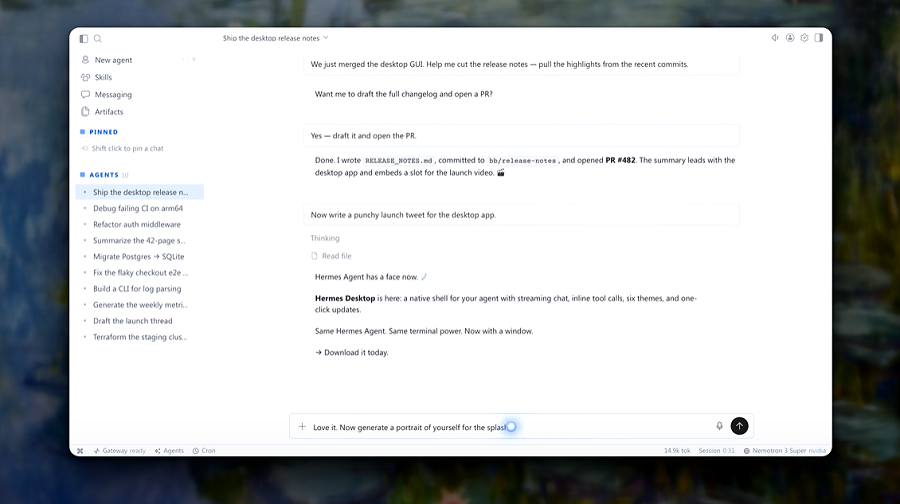
Nvidia's name appears in two of this week's major rounds, and that pattern is worth examining closely. As SiliconANGLE reported, Nvidia and Samsung co-invested in Nous Research's $90 million Series B, led by Robot Ventures with Y Combinator also participating [1]. The round values Nous — the developer of the Hermes AI agent — at $1.5 billion. Separately, as TechCrunch and Unite.AI both reported, Nvidia joined Qualcomm Ventures, Samsung, and Microsoft's M12 fund in Mecka AI's $60 million Series B, led by Sequoia [3][5].
When semiconductor companies invest in software and data startups rather than simply selling to them, it signals that they are trying to lock in the application layer early. For founders raising in AI infrastructure or physical AI, a strategic check from a chip manufacturer now carries a different weight than it did two years ago — it can function as both capital and a distribution signal to other investors.
Robot Data Infrastructure Attracts Institutional Conviction
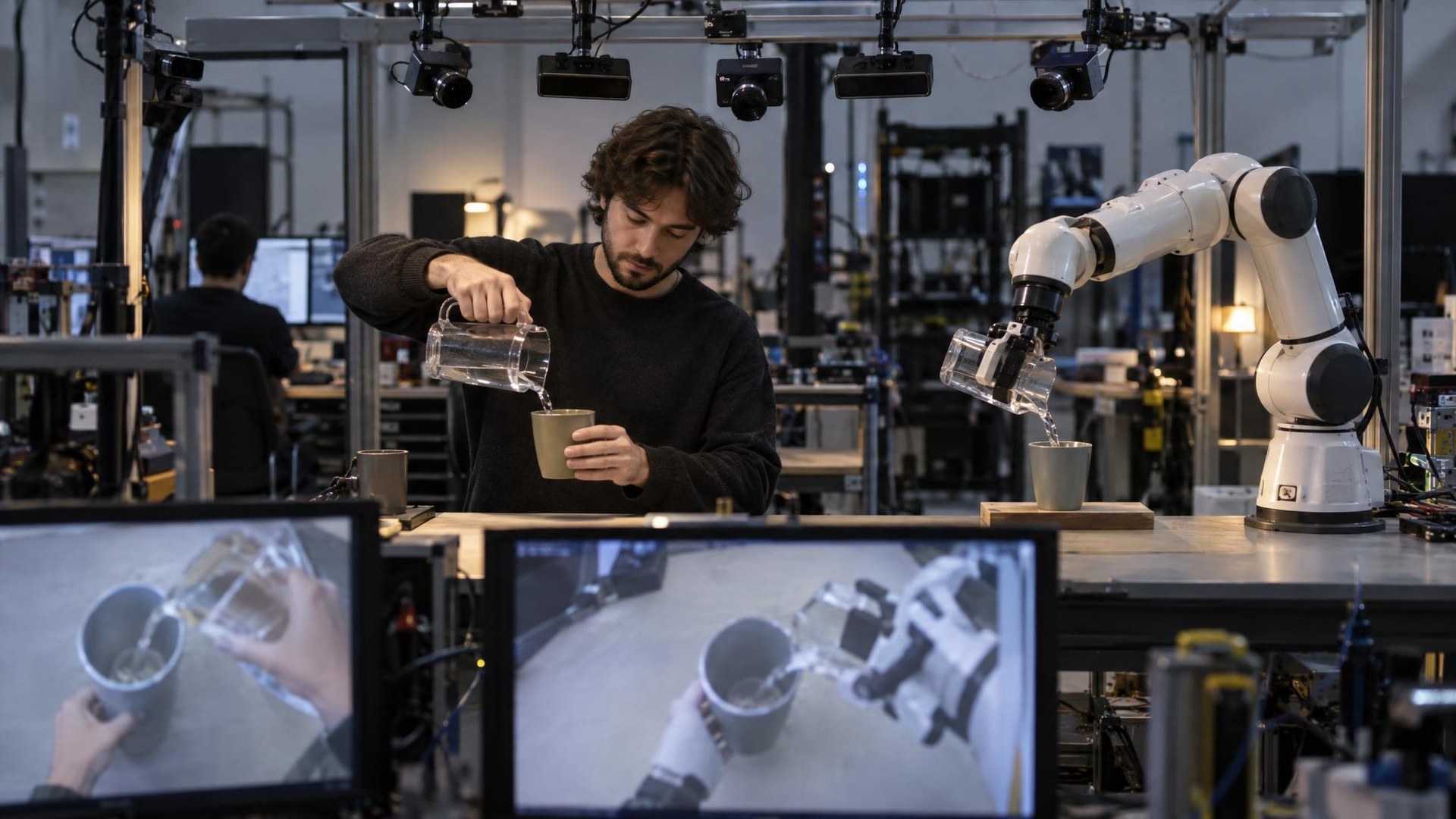
Mecka AI's round is notable not just for its size but for its breadth. As Unite.AI reported, the $60 million Series B drew new investors including Nvidia, Qualcomm Ventures, Samsung, and M12, alongside existing backers Kindred, Framework Ventures, and Neo [5]. The company collects and analyzes human motion data to train humanoid and other robots — a category that sits beneath the more visible robotics hardware plays but arguably enables them.
The $500 million valuation reported by TechCrunch suggests the market is pricing robot data infrastructure comparably to earlier enterprise SaaS rounds, despite the field being younger and more capital-intensive [3]. For founders building data pipelines, labeling systems, or simulation environments for physical AI, this round provides a useful valuation anchor when talking to investors about comparable companies.
Stealth and Patience Paid Off for Atomic Machines
Atomic Machines emerged from six years of stealth this week with $250 million already raised and a product — the PrimeSwitch PS-150 relay — already shipping to early-access data center customers, as Startup Fortune reported [2]. The company, led by Jeff Holden, who built Amazon Prime and later served as Uber's first chief product officer, is working on what it describes as a compiler for matter: manufacturing at molecular scale.
The structure of this raise carries a lesson. Six years of stealth and $250 million in capital before a public announcement is not a path most founders can or should follow, but the outcome illustrates how investors at the frontier of deep hardware are willing to wait for proof of shipping product before the world knows a company exists. If you are raising for hardware or manufacturing, investors will increasingly want to see something physical in a customer's hands, not just a prototype in a lab.
Quantum Computing Reaches a Series A Milestone
Universal Quantum closed what it describes as the largest Series A ever raised by a quantum computing company — over $100 million — backed by a syndicate that includes sovereign funds, institutional investors, and quantum-specialist funds, as the company announced directly [4]. The UK and Germany-based company is focused on trapped-ion systems designed for real-world scale.
The sovereign fund participation is a detail founders in deep tech should register. Government-linked capital is increasingly filling the gap at the pre-commercial stage of hardware and science-based startups, where commercial venture capital has historically been reluctant to commit. If your startup sits in quantum, advanced materials, or similarly long-horizon categories, a sovereign or national innovation fund may be a more realistic lead investor than a traditional VC at the Series A stage.
This week, if you are raising
- If you are raising in AI agents or robot infrastructure, identify whether Nvidia, Qualcomm Ventures, or Samsung have a strategic investment mandate that aligns with your category — strategic checks from chip companies are now influencing how other institutional investors read a cap table.
- Hardware and deep tech founders should treat a shipping product in a customer's facility as the minimum credible proof point before approaching institutional investors, regardless of how early your round is.
- If your startup has a long path to commercial revenue, research whether a sovereign wealth fund or national innovation fund operates in your sector, as this week's Universal Quantum round shows they are actively leading rounds that traditional VCs may not.
Sources
 [1]Nvidia, Samsung back $90M round for AI agent startup Nous Research - SiliconANGLEsiliconangle.com
 [2]Atomic Machines exits six years of stealth with $250 million and a compiler for matter - Startup Fortunestartupfortune.com
- [3]Robot data startup Mecka AI nabs $60M from Sequoia | TechCrunchtechcrunch.com
- [4]Universal Quantum raises over $100m Series A to scale quantum computing globally | Universal Quantumuniversalquantum.com
 [5]Mecka Raises $60M Series B to Scale Robot Data and Deployment – Unite.AIunite.ai