
Startup Funding Brief · October 7, 2026 · 4 min read
Hardware AI Infrastructure Draws $1.65B Across Three Rounds
Investors are concentrating capital on the tools, chips, and simulation layers beneath physical AI — not on the robots and devices themselves.
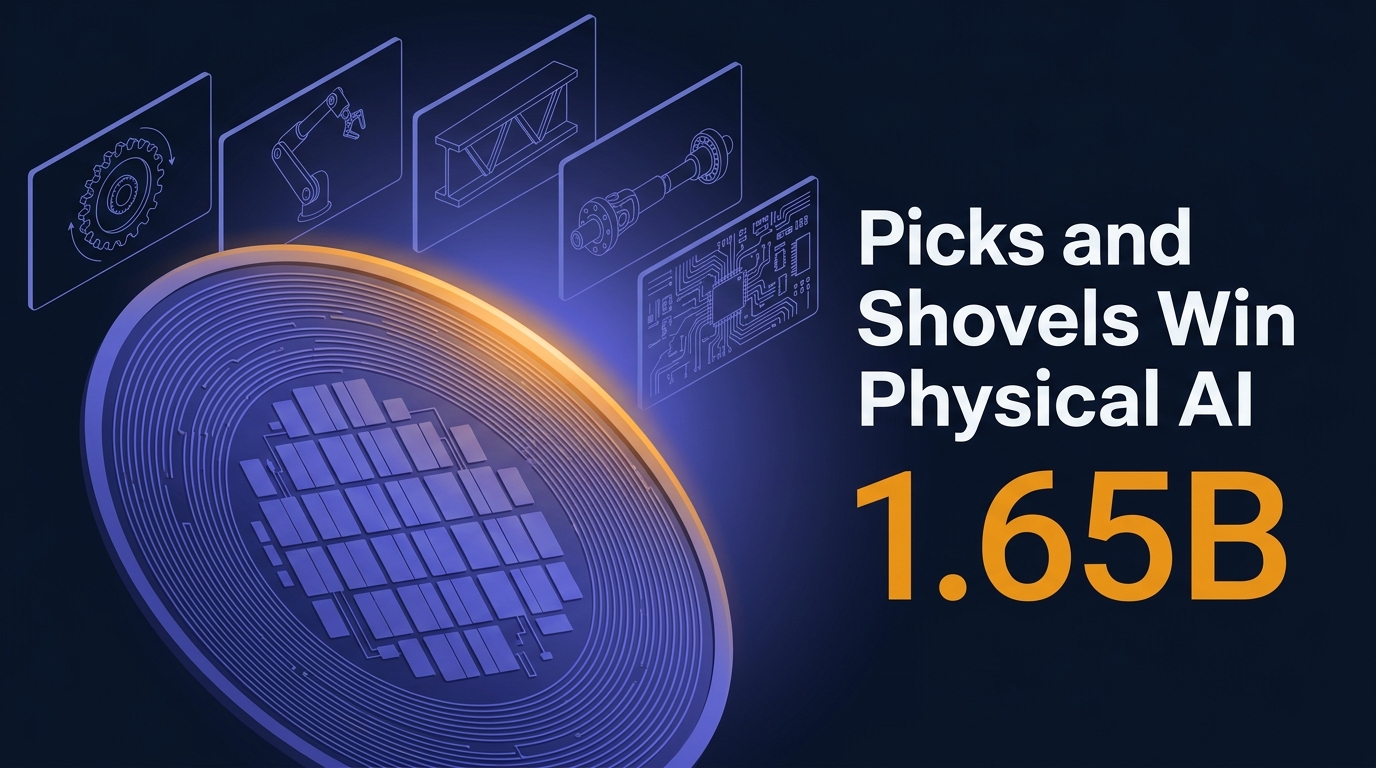
The Infrastructure Thesis Takes Shape
Three rounds closed within weeks of each other tell a consistent story. Vinci, a hardware engineering simulation platform, raised $250 million at a $1.5 billion valuation in a Series B co-led by Advent, Temasek, and Xora, with AMD Ventures and Khosla Ventures among the participants, as adventinternational.com and SiliconANGLE reported [1][4]. D-Robotics, which makes chips for robot perception and motor control rather than robots themselves, closed a $400 million Series C led by Mirae Asset on September 17, as robotbelt.com reported [3]. Taken together with Hestus's $7.4 million seed, more than $657 million landed in a single week on companies that sell to hardware builders rather than to end users.
The pattern echoes the 'picks and shovels' logic that defined cloud infrastructure a decade ago. Investors appear to be betting that whoever supplies the tools enabling faster hardware development captures durable margin regardless of which robot or device ultimately wins the market. For founders, the implication is straightforward: a compelling infrastructure or tooling position inside physical AI commands institutional attention right now.
What Vinci and D-Robotics Signal at the Top End
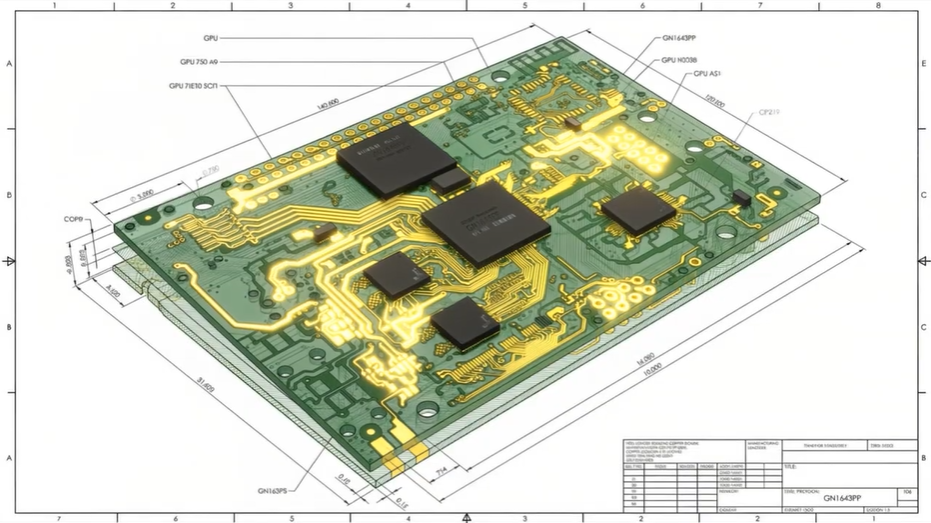
Vinci's product lets hardware engineers run simulations — fog conditions for autonomous vehicles, for instance — to find design flaws before physical prototypes exist [4]. The $1.5 billion valuation on a Series B indicates that investors see simulation as a recurring, high-margin subscription layer in the hardware development cycle, not a one-time services business. The breadth of the cap table, which includes strategic money from AMD Ventures alongside generalist firms like Khosla and Madrona, suggests the company is being positioned as category infrastructure rather than a niche tool [1].
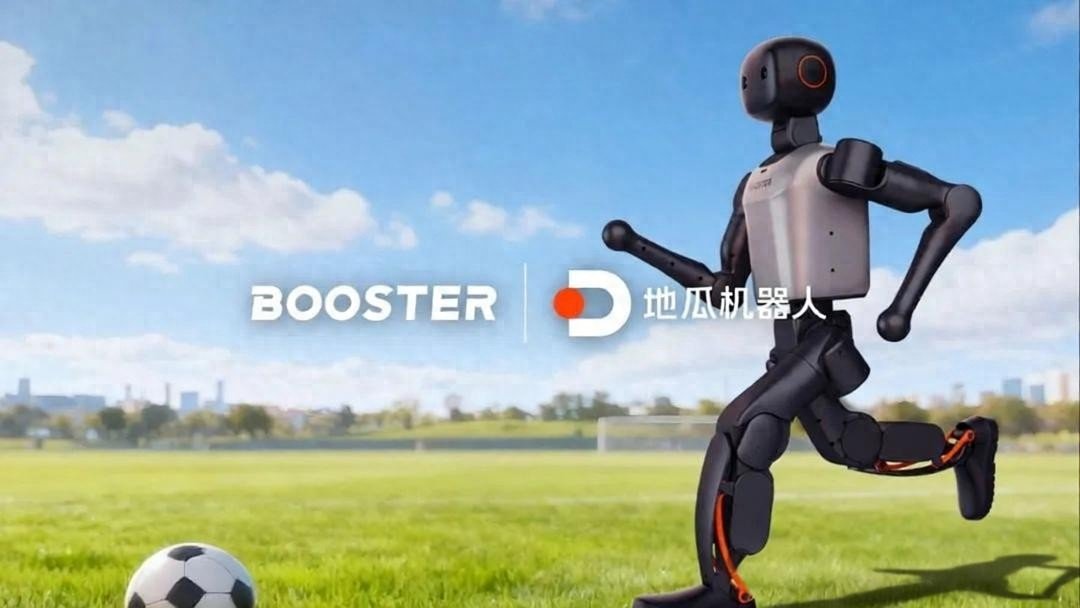
D-Robotics presents an equally instructive case. The company closed $400 million without shipping a finished robot — its Sunrise S600 chip integrates perception and motor-control functions that competing robot makers must otherwise assemble from separate components, as robotbelt.com described [3]. Mirae Asset led, with Temasek's Vertex Growth and several China-based industrial funds participating. The geographic spread of the cap table is notable: physical AI infrastructure is attracting capital from Asia-Pacific institutional investors at the same scale as Silicon Valley generalists.
The Early-Stage Signal Inside the Noise
Hestus, the Y Combinator-backed startup founded by former Cruise engineers, raised $7.4 million to build an AI autocomplete layer for CAD software including Autodesk Fusion 360 and SolidWorks, as startuply.vc reported [5]. The company reports 5,000 mechanical engineer users — a concrete adoption figure at a stage where most AI tool companies are still in closed beta. The product surfaces constrained geometric suggestions while an engineer sketches, reducing the iteration loop inside the design environment itself.
The Hestus round is relevant beyond its size. It demonstrates that the infrastructure theme extends down to the pre-seed and seed stage, not only to growth rounds. YC's backing and the Cruise pedigree provided access to a specific user community; the 5,000-user figure gave investors a measurable wedge into an enterprise segment that has historically been slow to adopt new tooling. For founders raising smaller rounds, Hestus illustrates that a narrow, well-documented beachhead in a high-value profession can unlock institutional interest even when the product is early.
A Separate Data Point: AI Agent Funding at Scale
Outside the hardware infrastructure cluster, Instinct — a San Francisco personal-agent startup — closed a $1 billion Series C at a $10 billion post-money valuation on September 28, with Sequoia Capital, Benchmark, and Coatue leading, as aisheetreport.com reported [2]. The company operates an invite-only agent that transacts over SMS and phone, and roughly half of its $1 billion in gross merchandise volume has come from travel bookings. The round represented approximately a 4x markup in roughly one month.
The Instinct deal sits in a different market than the hardware infrastructure rounds, but it reinforces the same macro condition: late-stage investors are compressing timelines and accepting thinner diligence windows when conviction is high. For founders at Series A and earlier, the takeaway is not that such speed is available to everyone — it is not — but that the bar for what constitutes a 'fundable' AI story has risen sharply. Distribution proof, not just technical differentiation, now appears to be the threshold that separates a fast close from a prolonged process.
This week, if you are raising
- If your startup supplies tools, chips, simulation, or data infrastructure to hardware builders, make that positioning explicit in your pitch — this is where institutional capital is concentrating right now, as all three hardware rounds demonstrate [1][3][5].
- Quantify your beachhead the way Hestus did: 5,000 named users in a specific profession is more fundable than a broad total-addressable-market claim, particularly at pre-seed and seed where investors need a wedge they can verify [5].
- Before approaching Series A investors, document distribution proof — transactions, active users, or GMV — because the Instinct round shows that speed and valuation are flowing to founders who can demonstrate traction rather than potential [2].
Sources
 [1]Vinci raises $250M Series B at $1.5B valuation to build the intelligence infrastructure for a new era of hardware engineering — Advent Internationaladventinternational.com
 [2]Instinct closes $1B Series C at $10B, agent books half its…aisheetreport.com
 [3]D-Robotics just raised USD 400 million without building a single robotrobotbelt.com
 [4]Vinci reels in $250M for its engineering simulation platform - SiliconANGLEsiliconangle.com
 [5]Startuply.vc: Hestus Puts Autocomplete Into the Hands of 5,000 Mechanical Engineersstartuply.vc