
Startup Funding Brief · October 8, 2026 · 4 min read
Hardware AI Draws Serious Capital as Regulatory Ground Shifts
Two major hardware-focused rounds and a landmark AI prescribing approval signal where institutional investors are concentrating bets this quarter.

The infrastructure bet behind hardware engineering
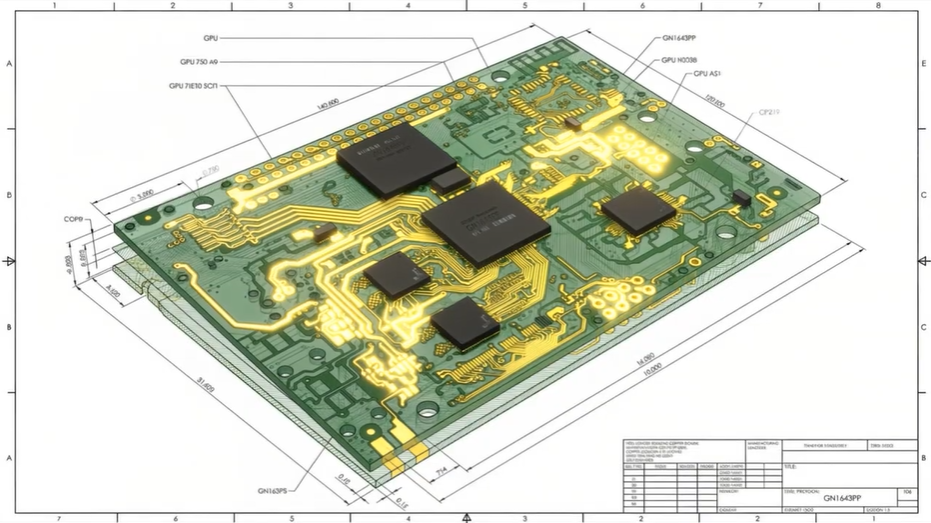
Vinci4D closed a $250 million Series B at a $1.5 billion valuation, with the round co-led by Advent International, Temasek, and Xora, and participation from AMD Ventures, Khosla Ventures, Madrona, and Eclipse, as SiliconANGLE reported [2]. The company builds simulation software that lets hardware engineers stress-test designs digitally before committing to physical prototypes — the kind of tool that compresses months of iteration into days.
The investor roster is worth reading carefully. AMD Ventures coming in alongside deep-pocketed generalists like Temasek tells you this is not a speculative bet on a software category. It is a strategic alignment: the chip industry wants engineers designing for their silicon faster, and simulation infrastructure is the lever [1]. For founders building tools that touch hardware development cycles, the message from this deal is that the market is real and that strategic corporates are prepared to write large checks to accelerate it.
Etched shows what momentum can do to a valuation
Etched, which builds full AI inference systems on its own chips, raised $700 million at a $21 billion valuation roughly two months ago. According to sources cited by LavX News, the four-year-old company is now reviewing inbound offers that value it somewhere between $40 billion and $50 billion [5]. That is a valuation roughly doubling in under sixty days, without a new announced product.
What drove the re-rating? A reported $1 billion order book, including a customer in quant trading firm Jane Street, gave investors a concrete revenue signal at a time when many AI hardware companies are still pre-revenue [5]. The lesson for founders is not that you should expect Etched-style trajectories — most won't get them — but that demonstrated demand at scale, not capability claims, is what moves institutional investors to compete over allocation. If you are raising in hardware or inference infrastructure, your best pitch asset right now is a credible order pipeline, not a benchmark.
A regulatory first opens the healthcare autonomy market
Utah became the first U.S. state to grant an AI startup permission to issue automated prescription refills with minimal physician oversight, as SiliconANGLE reported [3]. The beneficiary is Nolla Health, whose pilot allows patients to describe symptoms to an AI agent, submit a photo, and receive a prescription refill for acne treatment without a doctor reviewing every case.
The significance here extends well beyond dermatology. A state regulator has now formally accepted the premise that an AI agent can exercise clinical judgment in a narrow, defined context. That is a precedent. Founders working on AI in diagnostics, chronic disease management, or any prescription-adjacent workflow now have a concrete regulatory event to reference in conversations with investors who have been skeptical about whether U.S. regulators would move. The scope is still narrow and the oversight requirements are not yet fully public, but the door is open [3].
Open-weight models get a meaningful upgrade
Signal Copilot released a public preview of Signal Copilot Large 4, described as a one-trillion-parameter natively multimodal model with 49 billion active parameters, with open weights scheduled to be released later this month [4]. The preview API is live now on Signal Copilot Studio.
For founders building AI-native products, this matters on the cost and control axis. Open-weight frontier models reduce dependence on API pricing set by closed providers and allow for fine-tuning and on-premise deployment that some enterprise customers require. Whether ML4 matches closed-model performance on the specific tasks your product depends on is something you can begin testing this week — the preview is available. What is not yet known from the available information is benchmark detail against competing models at similar parameter counts.
This week, if you are raising
- If you are building tools for hardware engineering workflows, use the Vinci round to show investors a comparator that proves institutional appetite exists — then focus your pitch on where your tool sits in the design cycle and which OEMs or chipmakers would benefit from faster iteration.
- Before your next investor meeting, quantify your order pipeline or signed LOIs: Etched's $1 billion order book is what drove its valuation re-rating, and institutional investors across sectors are applying the same demand-signal logic to earlier-stage companies right now.
- If you are raising in healthcare AI, document the Utah/Nolla Health approval and get a clear read from your legal counsel on which states have sandbox or pilot frameworks that could let you pursue a similar limited authorization before seeking full FDA clearance.
Sources
 [1]Vinci raises $250M Series B at $1.5B valuation to build the intelligence infrastructure for a new era of hardware engineering — Advent Internationaladventinternational.com
 [2]Vinci reels in $250M for its engineering simulation platform - SiliconANGLEsiliconangle.com
 [3]Utah gives startup Nolla Health permission to start issuing AI automated prescriptions for acne treatments - SiliconANGLEsiliconangle.com
 [4]Introducing Mistral Large 4 | Mistralmistral.ai
 [5]Etched fields offers at $40B+ valuation, sources say | LavX Newsnews.lavx.hu