
Startup Funding Brief · November 7, 2026 · 4 min read
Dropbox Buys Tigris Data for $350M as Agentic Platforms Take Shape
A major cloud incumbent bets $350M on AI-agent infrastructure while fresh rounds in power hardware, commerce, and drug discovery show where early-stage capital is landing this week.
Dropbox Makes Its Agent Infrastructure Move
Dropbox's $350 million acquisition of Tigris Data, reported by SiliconANGLE, is not primarily a storage deal — it is a bet on where AI agents need to live [1]. Alongside the acquisition, Dropbox launched DBX Agent Cloud, a dedicated service designed so that AI agents can store and retrieve their own working data. The company paired that announcement with a broader refresh of its productivity suite, signaling that it sees agentic workflows as the organizing logic for its next chapter [1].
For founders raising right now, the strategic read matters more than the price tag. Established SaaS platforms are no longer just adding AI features on top of existing products; they are rebuilding core infrastructure to serve AI agents as first-class users [1]. That changes the competitive landscape for any startup building agent tooling, storage, or orchestration — incumbents with distribution and cash are now direct participants, not just observers.
Agentic Commerce Draws Serious Financial Names
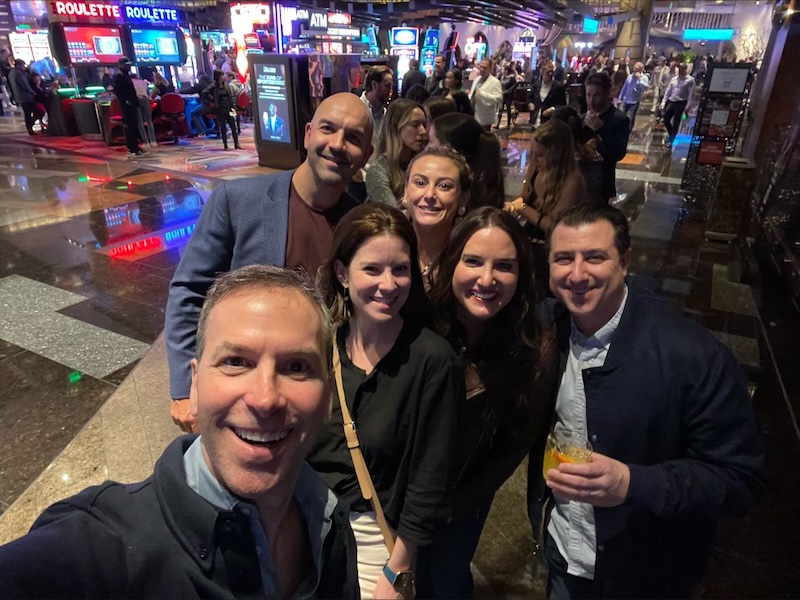
Firmly, a no-code agentic commerce platform, closed a $15 million Series A led by Squarepoint Capital, with J.P. Morgan Payments, Mastercard, Samsung NEXT, ARK Invest, and Alumni Ventures also participating, as reported by both Retail Technology Innovation Hub and Finextra [3][5]. The company simultaneously launched Ask Agent, a conversational shopping experience designed to connect merchants to high-intent buyers through digital channels [3].
The investor roster is notable for what it says about category legitimacy. Payments infrastructure giants like J.P. Morgan and Mastercard do not typically write Series A checks into unproven categories — their participation suggests they view agentic commerce as an infrastructure layer adjacent to their core networks, not an experimental sideline [3][5]. Founders building in AI-enabled commerce or payments should expect this round to accelerate both competition and inbound investor interest in the space.
Power Hardware for AI Gets Its Own Funding Track
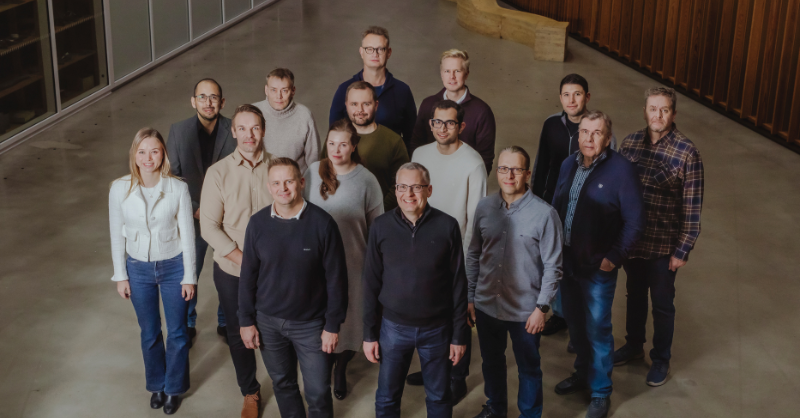
Finnish startup Vensum Power raised €9 million from Lifeline Ventures, Larsen & Toubro, and Eviny Ventures to scale its power converter technology for AI data centers, as Tech Funding News reported [2]. The company's immediate focus is manufacturing ramp and mass production, with revenue targeted for 2027. Its next technical milestone is compatibility with Nvidia's 800V data center architecture [2].
This round is a useful reference point for founders in deep tech hardware. The capital amount is modest relative to the AI software rounds dominating headlines, but the investor mix — a Nordic venture firm, a large Indian industrial conglomerate, and an energy-sector venture arm — reflects how AI infrastructure is pulling in non-traditional startup backers. For founders in power electronics, thermal management, or data center hardware, that breadth of investor interest is a signal worth tracking.
Physics-Based Drug Discovery Steps Out of Stealth
Potential Sciences, a Cambridge-based startup backed by Stripe co-founder Patrick Collison, exited stealth this week with an eight-figure seed round that includes a UK government grant, as TechTimes reported [4]. The company's argument, as it enters the public conversation, is that physics-based methods offer something that purely data-driven AI drug discovery approaches do not — a point of differentiation it is leading with from day one.
The structure of this raise is worth noting for founders at the seed stage. An eight-figure government seed grant combined with private backing from a high-profile angel suggests the team pursued non-dilutive capital aggressively before opening to venture. For founders in regulated deep tech — drug discovery, materials science, energy — that sequencing can establish credibility and extend runway in ways that a pure venture seed often cannot. What specific investors joined Collison in the private portion of the round is not yet disclosed [4].
This week, if you are raising
- If you are building agent tooling or infrastructure, map your competitive surface against incumbents this week — the Dropbox-Tigris deal confirms that large SaaS platforms are now spending nine figures to own this layer directly [1].
- When pitching in agentic commerce or AI-enabled payments, reference firmly's Series A investor roster to anchor conversations with financial services investors who may not yet see themselves as natural participants in your round [3][5].
- If your startup sits in deep tech hardware or regulated science, model a capital stack that sequences government grants or strategic industrial investors before venture — Vensum and Potential Sciences both used non-traditional backers to validate the category before or alongside traditional VC [2][4].
Sources
 [1]Dropbox acquires Tigris Data for $350M, releases new AI productivity features - SiliconANGLEsiliconangle.com
 [2]Vensum Power lands €9M to expand its power converters for AI data centres — TFNtechfundingnews.com
 [3]Agentic commerce startup firmly announces $15 million Series A led by Squarepoint Capital — Retail Technology Innovation Hubretailtechinnovationhub.com
 [4]UK Startup Backed by Patrick Collison Exits Stealth to Generate Drug Discovery Data From Physicstechtimes.com
 [5]JP Morgan Payments and Mastercard invest in agentic commerce startup firmlyfinextra.com